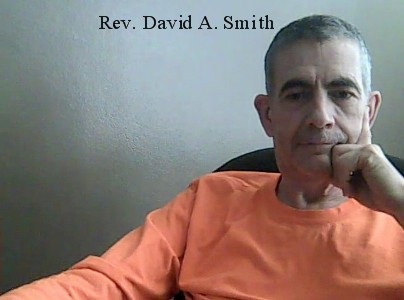
This website is now, mostly, an "about me" site. I grew weary of Facebook and similar, and decided to put my information on my own website. If people find it, OK. Or, if there is a reason to, I can direct people to it.
This website used to be my website which offered my body-work services. I am now retired from physical bodywork. But still offer a few services and products.
These services and products include:
Distance Reiki Sessions (30 min for $15) Inquire through the "Contact Form".
Click for the form
Reiki Training Manuals (Inquire through the "Contact Form").
Click for the form
I want to "meet you" prior to providing services. At a minimum, some email messages. Preferably a Zoom (or similar) "face-to-face" conversation. There are a lot of (lets just say) zealots who would not appreciate my services.
I am happy to chat with anyone, about my services, or just to converse about philosophical (spiritual) ideas, anything.
To inquire about services, or initiate a conversation:
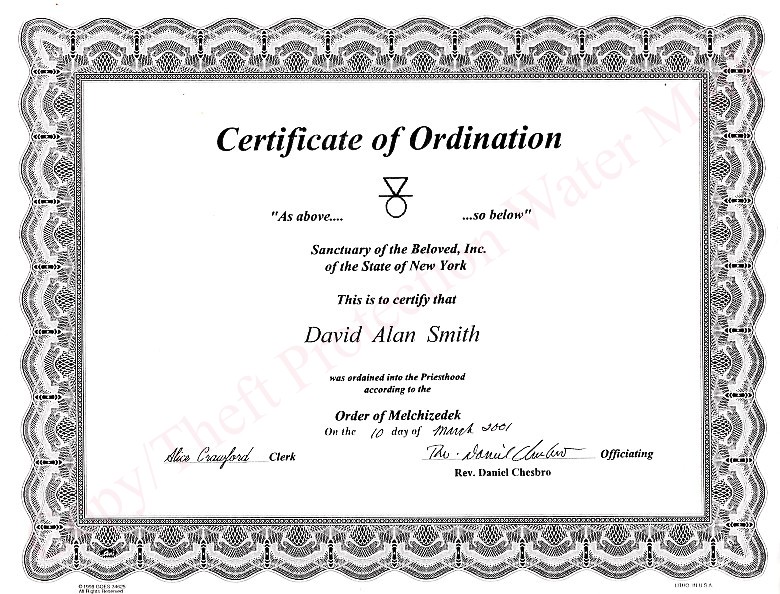
I describe myself as "spiritual but not religious". As such, I find Truth/Wisdom in/from many sources: each-and-every of the world's great religions, lay teachers/gurus, nature itself, my own spiritual practices, and some mystical experiences. Even so, I am ordained in "The Order of Melchizedek", an interfaith service ministry. My ordination is most simply (and superficially) understood as my personal "statement" about my belief that we are all Divine beings, all the "children" of God, all priests and priestesses. I just decided to "make it official", with credentials. Ministering was never my vocation. I made my living as a computer geek.
I've practiced Transcendental Meditation since 1974, with limited practice of 6 additional meditation techniques. TM is my dominant practice, but I am really liking the Sufi meditation.
I received psychotherapy for 8 years and couples therapy for 3 more; I participated in 20 years of assorted "self-help" discussion and support groups, mostly dealing with separation and divorce and "primary" relationships, but also CODA 12-step; For 6 years I served as a "facilitator" (leader) of self-help discussion groups. I've informally studied Buddhist philosophies such as 'Mindfulness', 'The Doctrine of No Self', 'Emptiness' 'The Mind Only School' and 'Attachment' for 20 years. These were not all sequential, often several were concurrent.
I was a professional Massage Therapist since 2000 (retired in 2026).
I have been practicing Reiki since 2000, and have long been attuned to the level of Master in 7 "flavors" of Reiki and, recently, also levels 1 and 2 of the Rand school HFR system. And I've taught Usui Shiki Ryoho (Reiki) since 2005, using a set of 4 training manuals I wrote and self-published.
I am a Oneness Blessing giver (Diksha). I have received the 9 Rites of Munay-Ki.
I endeavor to "walk the walk", not just "talk the talk".
Applied spirituality, made real through experience.
On my journey: "Some days I eat the bear. Some days the bear eats me".
I was born in 1952. I got married at the age of 20 (too young), I had a son, and then a daughter. Eventually a divorce. I was a single parent along the way. Technically I am still a single parent.
Still single (and still looking) and still a parent. I now have 3 grandsons.
Grew up in Sioux Falls, South Dakota. Went to public schools, and local tertiary education: Augustana (College, then, now) University. Had my first job locally. Moved for work to Virginia in 1980. Moved for work again, to Indiana in 2000. Moved back to South Dakota in 2010.In the summer of 1970, I lived with an uncle in Lanai Hawaii, and picked pineapple. I picked about 150,000 pineapple at about 1/2 cent each. I figured that out, while working. Prior to that I was not good at arithmetic in my head. But I had weeks to work on it. I now understand this as an example of neural plasticity.
In the summer of 1971, I built, with my own two hands, a lake cottage for my parents in central Minnesota. I had learned enough to do so, from a "Vocational Carpentry" class in high school. I had thought I was not smart enough for college/university, (high school GPA was 2.3 on 4 point scale). The carpentry was intended to be "career training". But I did go to college/university. Graduated Cum Laud, with a Bachelor of Arts degree in Natural Science. Most of my employment was working with computers, in a variety of ways.
The deterioration of my marriage led me into psychotherapy. Arguably it is the best thing that every happened to me. First I learned (enough more, certainly not all) about the (largely subconscious) content of my ego/self. I call this "conventional psychology" and it focuses on what is called "narrator consciousness". Later, I realized there is a deeper part of me, which led to questions/investigations about the nature of the ego/self. I call this "spiritual psychology" and it focuses on what is called "witness consciousness"
Quote:Between 2010 and 2020, from time to time, I dated internationally, living (with a girlfriend) in Beijing and (in an entirely separate situation) Taipei. FYI: Taiwan is NOT part of China. This living abroad consisted of repeated visits with the shortest being 3 weeks, and the longest being 9 months. Long-distance, international, cross-cultural dating has its complications. Not the least of which is, in contrast to the US where I am a college graduate and own 3 motor vehicles, in Asia, I am illiterate, neither speaking reading nor writing Mandarin (the dominant language in both Beijing and Taipei), and would not drive on a dare.
Wanabe musician. I sing -- at least I could the last time I tried. I own two musical instruments (electric bass guitar, and keyboard) but never mastered either. Don't want to be a professional (well if somehow it happened, OK...), just music for the enjoyment of it. Good harmony literally brings me to tears. I think it is metaphorical for the relationship I envision.
Mostly vegetarian and organic. Between healthy eating, Reiki, and meditation, people think I look roughly 10 years younger than I am. But, figuring in some old injuries, and conceding some to aging, I must confess I don't always feel or act that much younger.
I wrote this website (and its predecessor). I taught myself enough HTML and CSS to write it. People at work helped the first time. Mr. Google and my buddy Marc helped this time. And it is self-hosted. I created both of my logo images. This website can be seen as a superficial act of vanity. I see it as me being very clear about "who I am" and "what I believe", primarily for my own benefit. If I can "express it in writing" that suggests I am clear about my own point of view. As such, this is part of my "trek along the path". I choose to (passively) make it available to others. I trust them to "keep what they like [if anything] and leave the rest".
I was a Nature Science major in college (1974, B.A., Cum Laud). This major was a composite of Physics, Math, and Geography.
In 1990 I graduated from a (COMTA Certified) professional massage school, with a 500 hour curriculum, featuring anatomy, physiology, and Swedish Massage, and also business practices. The massage profession requires various certifications, licenses, insurance, and other credentials, some of which require continuing education. I have an additional 419 hours of continuing education in Therapeutic Massage and Body Work.
In massage school we were introduced to many "modalities" (specialties) of body-work. Body-work is a BIG world. A lot of modalities include, if not being entirely based upon, working with "life force energy", in one way or another. Energy-based healing can be thought of as a type of "laying on of hands" healing. However, it is based on energy (what science and medicine are beginning to recognize, and call the "human biofield") and may also include "faith" depending on the personal view of the individual practitioner. I was immediately interested in Reiki. It has since taken on the proportions of "a calling". I have been trained to the level of master (I can teach students) in 7 "styles" of Reiki, and levels 1 and 2 of the newer Rand-school "style" of Reiki. Specifics are detailed in the "Credentials" section below.
I was formally trained in the practice of "Transcendental Meditation" (TM Maharishi Mahesh Yogi), in 1974, and have practiced since. Decades later, I was also trained in six (6) additional types of meditation, which I practice occasionally. Specifics are detailed in the "Credentials" section below.
I received formal training as a Oneness Blessing giver (Diksha).
And I have formally received the 9 Rites of Munay-Ki.
My first job was with an office of the US Geological Survey, in South Dakota, as a contractor employee. This facility dealt with satellite imagery, aerial photography and maps. I held assorted positions beginning with customer service and ending with data-base content management. This job lasted 6 years.
My second job was another contractor job with the US Geological Survey, doing computer data-base work, regarding satellite imagery, aerial photography and maps. This was at their headquarters in Virginia, and it lasted 5 years. Both of these contractor jobs required some computer expertise most of which was self-taught.
My third job was as a Computer Systems Requirements Analyst, with Peoples Drug Stores, also in Virginia, lasting 8 years. This was the early years of personal computers. I evolved into the Desk Top Support person for Peoples Headquarters. Peoples was later bought out by CVS. By a quirk of fate, I had added corporate telephone systems administration to my skills, as the Peoples headquarters office was, over time, being closed down, and the previous phone people had been let go. The desk top support (me) had to continue, and I could absorb the phone duties. The phone system expertise got me the next job.
My fourth job as Corporate Telephone Systems Administrator was with SallieMae (the student loan people), also in Virginia, and also lasted 8 years. I also learned DNS and NMS (computer mumbo jumbo, but) important to the operation of a large, Fortune 300, company.
I also began, in Virginia, a "side business" in body-work consisting of Therapeutic Massage and Reiki. I first called my business "Therapeutic Massage Arts", later changing it to "Transformation Bridge". In addition to Reiki treatments I also trained Reiki students. I wrote and self-published 4 Reiki training manuals, for my students to use.
There was an internal hostile takeover of SallieMae, and new senior management bought another company in the student loan business, and closed down all the Virginia operations. Everything about this entire situation was absurdly, foolish, and brazenly vindictive in-fighting. But we all know the corporate "golden rule" – Those with the gold make the rules.
My fifth job was, again, with (a vastly changed) SallieMae, this time in Indiana, lasting still another 8 years. My work was, again, DNS and NMS, to which I added design, installation, and administration of computer data center wiring.
In 2008 I came to the conclusion that even if someone wins the "rat race" they are still a rat. I just quit my well-paid, full benefits, corporate job.
My sixth job was (sort of) being a full-time, self-employed body-worker (massage and Reiki). As it turned out this was, more accurately, self-un-employment.
While these do not include any formal education or credentials, I learned a lot about conventional psychology (the content of the ego/self):
While these do not include any formal education or credentials, I learned a lot about spiritual psychology (the nature of the ego/self):
The educational experiences were not all sequential, often several occurred concurrently.
I had intended to put image/copies of all the credentials I have on this website. More on this in a moment.
These credentials include:
The most important massage credential was "Certified Massage Therapist" (CMT), as it was called when I got it. This was commonly referred to as "National Certification" and was awarded by the National Certification Board for Therapeutic Massage and Body Work NCBTMB. This credential required, first, graduating from an accredited massage (or other body-work) school, to even be allowed to sit for the test. Then I needed to pass the 5-hour test of knowledge about anatomy, physiology, and massage techniques. National Certification was later superseded with "Board Certification", hence the BCTMB (Board Certified in Therapeutic Massage and Bodywork) credential after my name. I bought my website name prior to becoming Board Certified, hence the letters "CMT" in the website name.
And there were state massage licenses, county massage licenses, and even city massage licenses. And all the other things indicated.
But, I checked. Mr. Google IMMEDIATELY asserted that putting images of credentials on a website is a bad idea. Doing so risks misuse of the information. "Bad players" can steal your identity or other-wise impersonate you. And they can use the images to forge fake versions of credentials for whomever they want.
However, Mr. Google indicated it was better to simply list credential information rather than posting images. Seems to me that is not entirely safe either. But I've had my massage credential information on my previous website for 25 years. And as near as I can tell, that did not contribute to the identity theft that I did suffer. And believe me, "suffer" is the correct word.
So, with Mr. Google's (half hearted) blessing, and 25 years previous experience, here is a list of my primary body-work credentials which have identifiers:
Here is a list of my Reiki credentials (without identifiers, I have training certificates, but Mr. Google "just says no"):
And, here is a list of my massage credentials (without identifiers, I have certificates, but Mr. Google... ):
Total: 419 hours, 74 classes.
And now, here is the list of meditation techniques I practice. These provided me with no certificates, or other paper records. Just the knowledge and experience. I've practiced TM predominantly. The rest, occasionally. I am really liking the Sufi meditation.
I have, previously, confirmed that the TM organization has records, indicating I received their training. If anyone needs to know.
And finally, I do choose to include my Ordination Certificate. I consider this credential to be important. I've experienced that most people don't consider ordination in any "tradition" (commonly understood to mean "religion") other than their own, to be meaningful. None-the-less, I consider my ordination to be an important part of how I understand myself. And, the implications are far reaching, affecting how I understand, well, everything.
Beyond my "say so", there is no other "evidence" I can offer to substantiate it's validity.
I wrote a few poems, "back in the day" I do not consider myself to be a poet, because I didn't sit down with the intention of writing. These just sort of "bubbled out of me"; Each in a single sitting of an hour or two; Then polished for a few days, and then declared done. I think it would be fair to say these were, for all intents and purposes, "channeled", originating from outside my conscious mind. I was first the "scribe" (ideas came to me), and then the polisher (ideas came from me).
The following poem: "To Choose To Lose You", is copyrighted.
Copyright © 1986 David A. Smith. All Rights Reserved.
The following poem: "In Search Of", is copyrighted.
Copyright © 1990 David A. Smith. All Rights Reserved.
The following poem: "The Woman I Should Have Married", is copyrighted.
Copyright © 2008 David A. Smith. All Rights Reserved.
These lists are not necessarily comprehensive, some being representative.
Authors, spiritual: Abraham/Hicks, Adyashanti, Cynthia Bourgeault, Depak Chopra, Wayne Dyer, Byron Katie, Dalai Lama, Bruce Lipton, Jim Marion, Candace Pert, Eckhart Tolle, Neale Donald Walsch, Marianne Williamson, Gary Zukav.
Books, spiritual: "A New Earth" (Tolle), ACIM (you decide), "Conversations with God (Walsch), "Putting on the Mind of Christ" (Marion), "Wisdom Jesus" (Bourgeault).
Authors: James S.A. Corey, Edgar Rice Burroughs, Philip Pullman. Just depends on if something catches my interest. Most commonly, science fiction.
Actually I have a reading disability. This was undiagnosed when I was a kid in school, which predated awareness of such things. So, I don't read, unless REALLY motivated. I don't read much.
Movies, spiritual: What the Bleep (et. al.), The Shift (Dyer), You can Heal Your Life (Hay).
Movies: Amadeus, Avatar, Babel (the most disturbing movie I ever loved), Cloud Atlas, Finding Forrester, Freedom Writers, Gran Torino, John Carter, Kings Speech, Life of Pi, Love Actually, Man from Earth (not your typical science fiction, really invites you to think), Memoirs of a Geisha, Music of the Heart, Pay it Forward, Peaceful Warrior, Phenomenon, Princess Bride, Sound of Music. Adventure more than drama. I generally avoid violent, dark, heavy, and horror.
TV Shows: Current: "America's Got Talent", "The Voice", talent shows in general (often as YouTube clips). Occasionally soccer or (American) football. There is not enough good (invites you to think) science fiction -- too many are all action, violence or comic-book.
TV Shows: Old (either reruns or box-set DVDs): "The Expanse" (an all-time favorite), Frasier (original), Glee, Star Trek (TOS, TNG, DS9), "Hill Street Blues", "Babylon 5", "Battlestar Galactica" (newer one), "Firefly".
TV Shows I dislike that (excessively expensive) cable TV (which was often included free to me, where I lived) was replaced with many (not necessarily cheap) streaming services. Various things I am interested are not available, to me. I tend to wait (more or less) patiently for DVDs to be released, for newer shows I want to see. This is far cheaper than subscribing to a streaming services, just for one show. And, I am patient, enough. Recent examples include: newer Star Trek series and Foundation (Isaac Asimov). Again, a preference for science fiction.
Food: Lots: Mexican, Italian, Chinese, Thai, Vietnamese, Indian, Middle-eastern. I cook some of it. Mostly vegetarian. Usually cook for myself. When going out, more-so family-operated ethnic places, less-so corporate chains.
Music: Mostly spiritual/"high-vibration" stuff. And occasional classic rock.
Live concerts, Eclectic: Charlie Daniels (twice), Cowsills, Deva Premal, Gene Pitney, Handles Messiah (twice), Josh Groban (twice), Michael Johnson, Peter Paul & Mary, Willie Nelson. A few local bands, and some assorted tribute bands - some were pretty good.
Live concerts, Classic rock: Bonnie Raitt, Chicago, Eagles (twice), Edgar Winter, Elton John, Emerson Lake & Palmer, Fleetwood Mac (twice), Fog Hat, Gordon Lightfoot, Grateful Dead, James Taylor (twice), Journey (reconstituted), Kansas, Mark Farner (Solo, Grand Funk Railroad), Paul McCartney (twice), Paul Simon (twice), Peter Frampton, Pink Floyd, Rod Stewart, Steve Miller.
Your first question might be, what is a paradigm and what does it have to do with an "about me" website. I discuss them because paradigms affect everything about a person, their interpretations and understandings of their experiences, and everything they think, say, and do. This is because they are "the lens" thorough which each person "perceives" and "interacts" with, the world.
Directly relevant examples include the decisions I made about what to include in this website, and how I chose to express everything. And how each and every reader will understand and interpret what they read.
Actually paradigms affect everything about everything. And many people are not even aware of the concept.
A paradigm is a belief system. And each and every person has one - their own personal paradigm. Often, "belief system" is used/contextualized to mean "religious" belief system. But this usage of the term is far more than that, being entirely comprehensive. It encompassing a person's view and understanding about how everything works - existence itself, the world, life itself, human life, and (not surprisingly) "my" life in particular. Everything - large and small, personal and impersonal, near far and everywhere - everything.
Each paradigms has many, many portions/components ("elements"). Some elements are shared with other people, perhaps many others. These are frequently called "obvious", "common knowledge", or "common sense". However, it is possible for people to profess the same belief, but understand it differently. In any case, any given element may be shared by more or fewer people, and may be more or less sweeping in their (perceived) applicability. Other elements are, to one degree or another, personal.
Typically, paradigms have an internal hierarchy. Generally, there is one (possibly more) foundational (primary) element. A common example is one's choice of religion. After one or more foundational elements exits (religious or otherwise), many of the remaining (secondary, tertiary, etc.) elements are predicated upon that foundation.
"Religion" can mean any of a great many things, ranging from the worlds "Great Religions" to Wicca, Shamanism, and regional or tribal. But, atheism and agnosticism are also paradigm elements (belief systems, or portions thereof), filling the same "place" in a person's life as does religion. In effect these are the "none of the above" religion. When you ask a person what their religion is, and they say atheism or agnosticism - they answered your question.
This is the same idea as "not making a choice, is actually a choice". You chose, not to choose.
However, less obviously and very importantly, science, including medicine (allopathic), and intellectualism and academia can be belief systems (paradigm elements). Many people in these fields (with some exceptions), while not actually professing belief, act as if these are belief systems, which fill the same "place" in a person's life as does religion. These non-"religious" examples actually are, almost universally, secondary elements, being predicated upon a primary element: "mechanistic materialism".
Quote:
Mechanistic Materialism
A dominant primary paradigm element (in modern times, and "advanced" societies) is "Mechanistic Materialism". A more-so well-known treatise regarding this is René Descartes' "Clockwork Universe".
Mechanistic Materialism, like any paradigm element, can-and-does include many specific (sub) components, including many dreamed up after Descartes. There is no actual count or list, as this depends on all 8 billion people now living. And literally anything can be part of a persons paradigm. I'm sure we all know some people who believe some "uncommon" things.
A very few examples, which are more common and more significant, are:
At first glance these all seem obvious. But they are all predicated on mechanistic materialism. If mechanistic materialism is not the (apparently God given) "truth" that it is commonly believed to be, well...
... Paradigms is a huge topic, and maybe I'll have much more to say (here on the website). Or better yet, I should write that book I've been thinking about for 15 years, and have about 50 pages of notes and ideas jotted down...
Identity
A hugely important element within everyone's paradigm is their "identity"/"sense of self", which is commonly referred to as their "ego". It is built from the summation of (their interpretations of) their life experiences, situations, and circumstances.
Common usage of the term ego focuses on the characteristics of the ego: too big or too little, excessively or inadequately assertive, smooth/easy/comfortable (for others) or abrasive, or similar considerations. These all speak to the "content"/composition of the ego. For our purposes here, the content of the ego is immaterial. What matters here is the (presumed and unquestioned, but ultimately only) perceived "reality" of it - seeing it in some sort of objective or apriori way.
Quote:A common "spiritual" perspective is that one's ego/identity exist ONLY in one's mind, constituting nothing that can commonly be thought of as "reality". Said otherwise; "I (my sense of identity, as distinctly separate from my body) exist only as the idea of my self, in my own mind". An important implication of this is that ego is malleable. And possibly, even, optional.
Quote:An extremely important part of any/every-one's identity, is that ANY paradigm element, can exist not only as an intellectual or philosophical belief, but also as part of their identity. "I am (a/an) (something/whatever)". Examples can include: Christian, atheist, intellectual, poet, scientist, Goth, stupid, smart, old, strong, victim, cripple ... ANYTHING. However, the degree to which something is made a part of a person's identity can vary from almost none to complete, minorly or critically important. And, further, a person can have competing, or incompatible elements in their identity. A person can be completely sure their view of (anything/whatever) is absolutely, totally, and completely correct. And that any contrary view is absolutely, totally, and completely incorrect. And anyone thinking otherwise is (your choice of pejorative insult). But this can be "balanced" with (for example) "I am a kind, understanding, and accepting person". This can be rooted in "they ARE 100% (expletive) WRONG. I just won't say so (so that I can live up to my own (chosen) self image). A variation of this is "you are wrong, but I forgive you" (because then I can feel superior, twice). I don't mean to suggest or imply that either criticism or forgiveness is never genuine. Rather, that some can be self-serving.
And the importance of making something/anything part of one's identity is that "it", and anything to do with "it", become personal.
This is important because, for example, what could-have-been simply be a disagreement during a discussion (of whatever topic), also becomes personal. As a specific example, if I say to someone "I am not Christian, and I think some tenets of Christianity are incorrect" (which is a perfectly innocent and correct statement of MY OPINION), this can be upsetting to a devout Christian. Precisely because: if Christianity is a chosen part of a person's identity, any (perceived) criticism of Christianity is then perceived as a criticism of them. Read that twice. And, this works exactly the same for any religion.
Or, for that matter, the same process/mechanism can apply to any paradigm element which has been incorporated into an identity. For example "I think some tenets of science are incorrect". Or a more pointed example, stating "scientists who do not believe (some/any mystical experience) genuinely occurred are, "in reality", not being (oh, lets just choose) objective" - can be taken very personally, by someone who has spent years getting their PHD (or post-doc) in a discipline predicated on mechanistic materialism (which predominantly precludes mystical experiences).
Quote:In an easy-but-telling example, a person can be a devout fan of a sports team, to the point of making it part of their identity. If their team looses, the genuinely get upset. I understand this as an "illumination" of one process by which "things" become personal - time and effort spent on them. And they may altercate (verbally or even physically) with fans of the opposing team.
The above commentary about identity addresses only the ego. This is reasonable, since most people haven't had (or didn't recognize) any experiences "outside" of their ego-based-influenced-and-contextualized perceptions. Again, the ego is the sense-of-self originating from and contained within the mind. It is largely concerned with the body and all its experiences, which inherently exist within the mechanistic materialism "aspect" of existence. However, as previously hinted at, there is (at least one) additional "aspect" of existence. This commonly is called "spiritual" and the Human manifestation of this "dimension" goes by various names: soul, higher-self, Buddha Nature, and Atman, to name the common ones. Delving thoroughly into this aspect of existence is outside the scope of this writing.
Beyond simply introducing the idea here, I will say just a few things about it. Almost every spiritual and religious tradition, in one way or another, to one degree or another, includes teachings about "higher" (things). And they say, more or less directly, that this "higher" aspect of existence is the "real reality". And as such, this "higher" realty in the source of, and contains, the physical world, and everything associated with it.
Within the context of the physical world, mechanistic materialism is (effectively) "real". But, the mystics and sages of the ages, consistently report, "experiences" that "transcend" the (apparent) limits of the mechanistic-materialism-bound, physical world. Many people dismiss such claims, as superstition or religious foolishness. Until they experience such a thing, themselves. And even (especially) then, they need a way to understand their experience: what it was, what it means, and what it reveals about (a larger) Human life.
Quote:
Paradigm Limitations
Contrasts: There is a philosophy (the Contrast Theory of Meaning) that says physical existence inherently includes contrasts. In order for there to be anything even resembling "meaning", contrasts are required. Up requires down. Hot requires cold. Good requires bad. Happy requires sad. Like requires dislike. And many, many other examples. None of these words / ideas / conceptualizations can have any meaning, without its "opposite". As a generalization, contrasts lead to the first and perhaps most obvious limitation: believing any particular thing, precludes believing it's opposite. Or even something that is vastly different.
Quote:I expand the idea of "prejudices of their social environment" to be any firmly held believe - any part of a person's paradigm. As examples, few people can simultaneously believe in mechanistic materialism (which is epitomized by "the physical world is the only reality") and religion (God, miracles, angels, prayer, etc.). Or be both a Republican and a Democrat (American political parties) at the same time. Or be a Muslim and a Hindu at the same time - although, arguably, Ghandi effectively was.
Beyond this systematic limitation inherent in the nature of belief itself (the context of contrasts) - there can be specific limitation for any specific belief (paradigm element), most frequently these are items within "identity" beliefs. A number of examples are mentioned in the paragraphs that follow:
Insecurity: Arguably, and VERY importantly, most people are insecure - their belief in themselves, is limited. For whatever combination of reasons (and there are SO many possibilities), they are sure they are not (take you choice: smart, strong, talented, capable, good looking, young, old, rich, 1000 other choices, or simply:) ENOUGH. They build (fake) "public" personas specifically to hide/compensate-for their own doubts about themselves. Appearances (hair / tattoos / clothes / jewelry / shoes / etc.), possessions (cars / houses / art / etc.), attitudes (intellectual / tough as nails / irresistible lover / fool-comic / confident / etc.), and who they "hang with".
As such, a huge amount of time, energy, and money can become dedicated to maintaining their facade. Because they know they are "faking", it is never satisfying, at the deepest level. This can lead to a never-ending quest for MORE. Which in turn (can, and too often does) lead to competition, fair or foul. And, in the not-uncommon extreme, hoarding, lying, cheating, thievery, or worse, or much worse, or much much worse.
All too often, insecure people, instead of trying to improve themselves (presumably they don't believe it is possible to do so, actually - most likely subconsciously), seek out and proclaim faults in others (no matter how trivial or "far fetched"). This suggests some perverse logic - that "bringing other down" somehow raises "my" standing, at least comparatively. This is the root of racism, and a host of other "isms" - "at least I'm better than THEM". A mild and less direct form of this "comparison" process is complaining - the implication is "I know (or am) better (than that foolishness)".
However, the larger cost is the loss of all those resources that could be used to actually change, and become (more of) who someone/anyone wants to be (at the ego level). Or deeper (higher) still, to become who they actually are (at the higher-self, soul, Buddha Nature, Atman level).
And, the (apparent) existence of this dual-level of human beings, leads to the biggest paradigm limitation of all - giving your ego more "reality" than it deserves.
Quote:Self-limiting beliefs. These can be active, such as "I can't/don't (something/whatever)". Maybe you can, or could learn to. But you "can't", because you don't even try, because you start with the belief that you can't. If you tried, studied, learned, and/or practiced enough, well.... Self-limiting beliefs can also be passive - you simply never realized there could be any alternatives to the way you have always thought (and correspondingly lived).
Quote:A insidious specific example of self-limiting beliefs "in action" is that some people, when they do (apparently) try something/whatever new (and presumably difficult), they don't really try, and correspondingly fail. One explanation is that they know they didn't really try, and so the failure, is not really a failure, in tortured logic. But if they did really try and then fail, that would "prove" to them that they really are "inadequate". It is less emotionally risky to "self-sabotage" the (appearance of) trying, than to really try and then fail.
Dogma is also a huge example of paradigm limitation, because it (typically/frequently) involves an ACTIVE rejection of views "conflicting" with someone's/anyone's held views. Often, these views are the among the ones incorporated into a person's identity. These views can be religious, or scientific, or something as trivial as which is better: Coke or Pepsi. This limitation, often and fairly, can be characterized as "ignorant, closed minded, stubborn, and proud of it". But, of course, dogmatic belief is seen, by the believer, to be inarguable truth.
Quote:Judgement: Another especially significant point, is that egos (a major element of a person's paradigm) tend to judge, nearly everything, to one degree or another. Common examples include: Good or bad. Like or don't like. Want or don't want. Understand or don't understand. The judging criteria can vary, and may include varying claims (often exaggerated) of objectivity. But usually there is a significant amount of subjectivity: "I (some judgmental statement)", is subjective in two ways. First it begins with the word "I". Second, the significance/importance is based-on/determined-by how (the object of the judgmental statement) is understood to affect ones self. This effect may be tangible, or it may "only" affect how we feel about ourselves (which can seem oh so very significant). Thus, a person's paradigm directly can limit their ability to "appreciate" (something/whatever) - any number of the events of ones life.
Paradigms Themselves: Also importantly, many people are not aware of the existence of paradigms, and correspondingly don't consider the nature of paradigms, in the first place. Their view of things is just what they know and believe. It is "just the way things are". Their own paradigm is not understood at all, to be something that was (subconsciously) build in their own minds. So it never occurs to them that it is even possible that (at least parts of) their life-long held beliefs, can change. Yet, there are numerous examples of people changing significant (at least to them, especially if it is part of their "identity") elements of their paradigm: their religion, or sexual orientation, or political party, or favorite sports team, to name a few. However, for more people, the whole concept that their own paradigm, which has always seems to be (more or less) immutable - a given - a fact - a truth, can be remade if they so choose, hadn't crossed their minds.
Using myself as an example, I was a science major in college (featuring mechanistic materialism). Now I practice Reiki and am an ordained spiritualist priest (believing all manner of things that most people don't). These are BIG paradigm changes. I didn't start with any such intentions, nothing even remotely resembling "out with the old, and in with the new". I just "evolved" as I experienced, read/studied, and did my spiritual practices (meditation et.al.). But, once I realized the "path I was on", I proceeded, intentionally.
Zealousness: Zealous can have a more innocent/pleasant meaning/use - "the child's zeal was obvious and endearing". However, my use of the term, which is born of my experiences, have led me to use the term to refer to a combination the "paradigm limitations", specifically: Insecurity, Dogma, Judgment, and Self-limiting Beliefs. Since this term does not introduce any new principles, it is mostly for communication efficiency. If you understand how I mean/use it, I opine this is very useful.
First, I want to make it perfectly clear I do not apply the term "zealous" to any paradigm itself. Rather I apply it to specific individual, or groups, who profess "adherence" to the paradigm. And, while most of the examples I discuss concern "religious" zealots (they are easier), zealousness can readily apply to science / medical / academic folks (adherents to Mechanistic Materialism). I will go so far as to opine that the percentage of Mechanistic Materialism adherents who are zealots, exceed the percentage of "religious" adherents who are zealots.
An easy example of a zealous (religious) group is the W-B-C (you know, they made the news quite a while back) for "hating on" so many peoples and situations. "The last time I checked" hate was not a virtue in ANY religion or philosophy. My personal view is this group of people had such "intense" views of the demands/requirements for conduct required of people, by (their understanding of) Christianity, that no one (especially they themselves) can live up to them. I see this as a perfect example of "finding fault with others", as a result of ones own "insecurity" (discussed above).
My predominant experience is that "zealous" "believers" (which absolutely is not each/ever/all believers) of any "system of teachings" (paradigm elements) "suffer" either-or-both of two conditions: dogmatic or superficial adherence. My observation is that religions zealots can suffer either. And, mechanistic materialists zealots are predominantly dogmatic. In fact, they often cite their obvious-and-rigorous lack of superficiality as evidence of the correctness of their dogma.
Examples of dogmatic religious zealotry include: placing extraordinary emphasis on the (generally, written) words themselves, which explicate the "message" - in other words, the wording of "The Word". And required / mandatory / obligatory / (obsessive?) performance of rituals (if any) that are part of the "system". In both case, I would prefer to see appreciation of both the "lesson" of the words, and the "purpose" of the rituals. These, in turn, would be evident in the degree to which they are "lived"/practiced in a person's life (not just espoused/performed from time to time).
Examples of superficial religious zealotry include: participating in services / talks / teachings / rituals, ONLY once a week - the rest of the time, "not-so-much". (Extreme) examples of "other times" behavior include, "kicking the cat" or other neglects or abuses of "family", cheating people in business, indulging hedonistic behavior, hating your neighbor or enemy, or so many other choices. A very easy example is that one of the several vows one must profess to become a Buddhist in the first place, is to refrain from intoxicants. This is not always the case. Other examples involve twisting "teaching" to fit ones personal (selfish) agenda. I see the W-B-C folks this way. Also - "God want me to be abundant" as an excuse to "abuse" employees and customers (if and when it happens that way). And, superficiality itself "fuels" insecurity. People know the truth about themselves, "in their heart of hearts". It is just too easy to prevent the "head" from "getting the memo".
Either dogmatic or superficial behavior can account for (the predominantly subconscious in origin, but evident in words and deeds) "if I publicly proclaim loudly enough, that compensates for insincerity and/or insecurity - doesn't it?".
VERY importantly, I can see two "other sides of the coin". The first, specifically regarding superficiality, is the "paradigm limitation" of "you never realized there was/could-be 'more to it'". However, if you are not "too caught" in your current views (such that you automatically dismiss "new ideas") there are other perspectives presented / introduced / available, from various media/sources.
The second is that either dogma or superficiality (all and any paradigm limitation, actually) can rightly / correctly / properly be understood to be imperfect Human Beings being, well, imperfect. That is an entirely valid point. Sincere people, with better intentions that is evident in their words and deeds, can be "caught" in their egoic/habitual "programing". And they can be genuinely aware (to one degree or another) of this fact. This, in turn, fuels their "trek along the path", regardless of how far they have already traveled, and how far there remains to go. As if any of us can ever know either of these with certainty.
However, people can use "I'm only human" as a "cheap excuse". The rest of "the picture" illuminate if such a claim is sincere and valid - or not.
As someone who has been "improving" myself for decades - first, some of my relatives will tell you I haven't accomplished much, certainly not enough. And second, I "testify" that the "journey" can be arduous and frustrating - peppered with bouts of "Lord, grant me patience, now (expletive)", and "The problem with instant gratification is it takes too long". But I can say with 100% certainly it has been worth it, even on the occasions when I am cursing the ongoing process.
If any readers "take offence", at any of this discussion of "zealotry", I invite you to "take a fearless inventory" of yourself. Not to find "failings" for which you should suffer consequences (actually, that happens pretty-much automatically) or "atone", but rather to find ways in which you want to "improve" yourself. And then, begin to do so.
My Paradigm (a very few comments)
For a long time, like so very many people, and specifically as a science major, I included "mechanistic materialism" as a foundational component of my paradigm. In fact, the choice to major in science is directly connected to already being "rooted" in mechanistic materialism - I just wanted to perfect my knowledge of it.
But, I have evolved vastly from there. Much, but not all of that evolution derives from the fact that I've had a handful of mystical experiences (none of which involved mind altering substances). I only go into detail with select people, in select circumstances. This is because zealous mechanistic materialists (regardless of any other considerations, such as their education or profession) believe such experiences are categorically impossible. Therefore they conclude that claims of such can only indicate, first that I (or whomever) am obviously wrong, and then at least complete foolish, if not obvious suffering psychological pathology (as the Brits would say: "barking mad").
I learned a very long time ago, that most people are not particularly open to "alternatives" to (at least parts of) their own personal belief system, their own paradigm. As such, I don't try (any longer) to explain myself to most people. Experience has taught me that most people are incapable of understanding me (I am too "far afield" from their paradigm).
Quote:I, by my own assessment, have determined that my personal paradigm matches about 85% of Buddhist philosophy, about 85% of A Course In Miracles philosophy, and 85% (maybe 90) of Sufi philosophy. I explicitly use the word "philosophy" because I am interested in the "message" of the teaching. I am not interested in "practicing" any of these "systems". I want to "understand" the deeper (higher) truth and incorporate any such into the thoughts, words and deeds of my daily life. Said in other words, I want to "walk the walk", not just "talk the talk". I want to "live the life", nor "profess the belief" through words or rituals. I do however, agree that the rituals and professing can have some value, in "propelling," one along the path. I find, however, that even if there appears to be superficial "philosophical" agreement, many people don't "go very deep". And it is easy to mistake the "practices" of a system, which are indeed intended to yield realization, for "the point". Thus the practice becomes an end unto themselves, and not a means to something more.
Quote:Beyond not seeing themselves very clearly, a lot of people (in my experience) are not (let's just call it) generous in their judgments. Well, some are more generous than others. Especially is the discussion is sufficiently philosophical, and they don't need to "take anything personally". If anything starts to feel personal, people tend to "dig in their heels". This digging-in-of-heels is easier to understand if we keep in mind that ones (sense of) "identity" is also one of the elements of their paradigm. Further, the parts of anyone's paradigm that are the least open to "reconsideration", are the identity parts. If any particular conversation/discussion "infringes" an a person's sense-of-self, well....
I cherish the few people I know who are “on my wavelength”.
I have seen, with too many people, in an absurd double standard, that I am supposed to accept their view of reality, the world, life, and everything. But when mine views ARE different, well, somehow, the reverse is not at all even plausible. There is no possibility that my (or presumably anyone's) sufficiently-differing “views” can be valid. Or that, upon serious investigation, (in this example) my views can be understood to constitute a superset (to used mathematical language) of theirs (their view is-contained-within/can-fit-into mine).
Of course, some people are “barking mad”. Well, actually that really only means that they are "excessively" (an entirely subjective term) eccentric. The question of pathology is mostly based on comparisons to "average". But for anyone to immediately jump to such a conclusion, simply because someone else's views are "too different" from THEIR OWN, without any serious investigation, consideration, or attempt to understand, suggests a limited (and thus limiting) paradigm belonging to “the judger”.
For many people, there is little allowance for the world to be (in any substantive way) bigger, wider, deeper, and/or more complex than their own view. And consequently, other people can't legitimately have vastly different understandings / interpretations / conclusions about the nature of reality, the world, life, and any/every-thing.
Quote:Another example of absurd (non)logic, is the insistence, by zealous mechanistic materialists, that the only way non-material phenomenon can be considered real is if they leave material "finger prints" or "footprints". That "valid" evidence must be findable (and measurable), if not directly with the 5 senses, with machines. "Say what"? They are NON-MATERIAL PHENOMINA. And to assert that lack of "measurable" evidence proves their non-reality, is entirely a circular argument.
To press the point, show me mechanistic-materialism-based evidence that love is real, that anyone ever loved anyone.
And we can also cite the philosophical axiom, "The absurdity of the conclusion reveals the absurdity of the premise". Unfortunately, any preferred premise can be (mis)used by anyone to bolster their own perspective.
The massively important point is that people live their lives based on a paradigm, their paradigm – as the "model" of how everything works. To the extent that any particular paradigm is "limited", the lives lived accordingly, are correspondingly limited.
The story of the blind people and the elephant is also very useful, here. And even more poignant if someone actually sees, at least more of, if not all of, the elephant.
The importance of my mystical experiences is that they "realized" (made real), in personal experience, a great number of philosophical and religions "ideas" that had previously existed only in the mind, as conceptualizations. By analogy, it is the difference of reading the travel brochure vs, actually visiting some new (and presumably exotic) place.
Have you ever noticed that, from time to time, it seems we are our own "worst enemy"? Whether the example is big or small, this often takes the form of, at the last moment, we "sabotage" something we really want, and have been "working on" diligently. There are two "spiritual" explanations for this phenomenon.
The first explanation is that the ego sabotages itself, to maintain its "grip" on us. By engineering an experience that is upsetting, fearful, or otherwise "disturbing" the ego justifies its own existence with something along the lines of "see, you need me to keep you safe. There IS danger and misfortune everywhere. If I don't keep you 'on your toes', just IMAGINE (I choose this word VERY intentionally) what could happen to you"! Beyond simply justifying itself, this entire scenario is the "work" of the ego, both in the wanting to begin with, and in the eventual sabotage. Thus the ego is "keeping itself busy", and thereby perpetuating itself.
After all, the egos MAIN goal, more than all others combined, is self-preservation. The question is: "what do we mean by a 'self', which needs to be preserved"? Typically this is "thought" to be the sense-of-self that is presumed to be an actual "thing". This "self" is concerned with the body, objects, and ideas that seem important / valuable / meaningful - to itself.
But this perceived importance is also the work of the ego. And thus, in the end, this entire scenario, every part of it, is about the ego preserving - itself - meaning the exiting-only-as-an-idea self. By convincing us that (something/whatever) is important, the focus is moved away from the story-teller (the ego) to the content of the story. Thus the ego "live another day", secure in its "hiding place".
There is a specific formulation of self-sabotage, that grows from self-doubt. This is commonly called "fear of success". I never believed anyone is actually afraid of success. My opinion is that they are afraid of (eventually) losing what ever "success" (presumably) would have "gained" them. It is emotionally "safer" to "self-sabotage" than to risk the eventual (perceived as real) "loss".
The second explanation is that the soul / higher-self / Buddha Nature / Atman sabotages ego-level wants, goals, ambitions, and aspirations. This is because they ARE fundamentally superficial and pursuing them "distracts" one from the "higher" work. This can be described as "liberating" oneself from the illusions and delusions of the ego. In this view, "suffering" drive us to "dismantle" the "false"/ego identity. This "higher" work is "spiritual 'growth' and 'evolution'". Unfortunately, without some mystical experiences of ones own, "spiritual 'growth' and 'evolution'" are just "sounds good" and "feels good", philosophical/intellectual "conceptualizations". It is immaterial whether or not they have been elevated to the status of "beliefs" (as opposed to "random" thoughts). Without experiential "realization" (to be made real), in the final analysis, they exist only as thoughts in the mind. Such thing become "real" only when personally experienced.
This website is copyrighted.
© 2026 David A. Smith. All Rights Reserved.